
Sea-view property in Marbella: what to check before buying
The view that matters is the one you enjoy from your breakfast table, favourite chair or evening terrace. Give those everyday positions as much attention as the most striking photograph.

In this guide
A sea view can be a central reason to buy in Marbella. It can shape breakfast, a quiet working afternoon and the way a house feels when you return after travelling. But ‘sea view’ describes many different experiences: a broad horizon from the sofa, a glimpse between buildings, a panorama from an upper terrace or water visible mainly when standing at a balcony edge.
Before comparing prices, define the experience you want to buy. Where will you spend time, during which months and with how many people? A view from an occasional roof terrace may be delightful yet serve a different purpose from one that accompanies the main living room every day. Neither is automatically superior; the distinction belongs in your search brief.
This guide proposes a room-by-room method for testing that brief. La Solana, La Morera 712 and El Bosque illustrate different scales and settings in the current catalogue. Their descriptions provide starting points for questions. The comparison does not establish a market premium for views, a ranking of districts or the outcome of a technical or legal assessment.
Four positions to compare before judging the view
| Everyday position | What to observe | Decision it helps you make |
|---|---|---|
| Seated in the living room | Horizon through the actual glazing, with normal furniture | Does the sea form part of ordinary time indoors? |
| At the terrace dining table | Seated view, shade and the route from the kitchen | Would you enjoy using this position for meals? |
| In the principal bedroom | View, privacy and the effect of curtains or screens | Can you enjoy the outlook without changing your routine? |
| On an upper terrace or roof | Access and the difference from the main living level | Is the panorama an everyday feature or an occasional destination? |
Describe the view you want in ordinary language
Replace a broad requirement for panoramic views with two or three concrete priorities. You might want to see water while seated indoors, have a private dining terrace with an open outlook or enjoy the horizon from a bedroom. Separate essential positions from attractive extras. This helps an agent select properties whose layouts support the brief rather than simply finding a listing that contains the right phrase.
Decide what you can comfortably accept in the foreground: gardens, roofs, neighbouring terraces or a road. A view can include those elements and still feel right. Equally, an extensive sea panorama may not compensate for an overlooked seating area. Make the judgement from the positions you expect to use, and let everyone involved in the purchase describe their own priorities before the first viewing.
Include the intended season and length of stay. A home for short summer visits and one for several months of winter living may call for different balances between open terraces, sheltered seating and comfortable indoor views. Keep the brief specific enough to guide a shortlist without inventing a universal definition of a luxury outlook.
Ask where each photograph was taken
Before travelling, request a simple explanation of the main view photographs: room or terrace, floor, approximate camera position and whether the image is current. Identify aerial photographs separately. They are useful for understanding a property's setting, but the relevant comparison for daily life is the outlook from an accessible part of the home at an ordinary viewing position.
Ask for an unhurried video that begins inside the living room, approaches the window and continues onto the terrace. Include the sides of the scene and the immediate foreground. It can clarify how the rooms connect and what lies outside the strongest single frame. A remote video helps decide whether to visit; it does not replace checking the property yourself.
If an image is a render, a proposed alteration or a view from a different unit, ask for that to be identified explicitly. Keep a small set of reference pictures with their locations marked on the plan. At the viewing, return to those positions and compare them with your experience rather than trying to recreate an unidentified camera angle.
Sit down before deciding that the living room works
Begin with the sofa, dining table and any place where you would read or work. Sit at a normal height and observe the horizon through the actual window frames. Notice what changes when you move between seats. The question is not simply whether the sea is visible somewhere in the room, but whether the outlook accompanies the way you intend to use it.
Consider the room with everyday furnishings and privacy measures in place. A television position, a tall cabinet or lowered shading may alter the arrangement you first imagined. Ask whether the furniture shown is included and whether the layout relies on moving fixed elements. An appealing alternative furniture plan is a useful idea; it should remain an idea until its dimensions and practical implications are checked.
Try the room with doors closed as well as open. Listen, look at reflections and discuss how you would use it when the terrace is less inviting. Record the conditions of the visit. A quiet, bright afternoon provides evidence of that afternoon, not an all-season assessment of comfort, noise or glazing performance.
Judge the terrace from the places where people sit
A terrace is more than its total area. Find the position for a dining table of the size you need, then check the view from the chairs. Observe the balustrade, the edge of an awning and anything in the foreground. A standing panorama and a seated dining outlook can be different experiences. Walk the route to the kitchen carrying an imagined meal, including steps and door thresholds.
Identify sheltered and open areas separately. Consider how circulation, furniture and storage divide the available space. If the property has several terraces, ask for their individual positions and measurements rather than treating the combined figure as one continuous outdoor room. The most useful area may be the one most closely connected to everyday living.
For a rooftop or upper terrace, assess how often you would use the access. Would you go upstairs for a quiet coffee, or mainly when entertaining? Ask about any proposed changes to barriers, shading or equipment before assuming they can be made. The viewing establishes what is there; technical feasibility and permissions need their own checks.
Compare the outlook with light and shading
Ask for the orientation of the specific room or terrace, not only the property's overall label. Then visit at a time relevant to your routine. Notice whether you want the blinds open while reading, taking a call or eating, and whether the available shading preserves the view you value. A preferred compass direction is a useful starting point rather than a complete comfort assessment.
IDAE's household energy guidance recommends using awnings and shutters to reduce unwanted heating and paying attention to windows and insulation. That supports a practical viewing question: how does this home's shading and glazing work in the rooms facing the view? It does not establish the efficiency or running costs of any property in this selection.
Request specifications, service information and relevant property documents for specialist review where needed. If comfortable use appears to depend on replacing glazing or adding external shading, obtain advice and a property-specific proposal before incorporating the result into your decision. Keep the view as observed separate from the improvement you hope to achieve later.
Allow for a second viewing in different conditions
A single visit provides one combination of light, visibility and weather. For a serious finalist, choose a second appointment that answers something the first could not: an indoor view later in the day, the shaded dining position or the experience of an exposed terrace. Keep the observation specific, with a date, time and a note of the conditions.
AEMET provides a municipal forecast for Marbella. Use the current forecast and relevant notices to plan the visit; this article does not embed short-lived weather values. A forecast for the municipality is a planning reference, not a measurement of the conditions on a particular balcony.
If a second visit is not possible, ask for clearly located, dated video and leave the missing observation visible in your notes. Avoid turning a clear-day photograph into a promise of identical visibility throughout the year. The purchase decision can still progress, but it should distinguish what has been seen from what remains to be checked.
Look back towards the home as well as out to sea
From each preferred seating position, observe neighbouring windows, balconies and shared circulation areas that are visible from the property. Ask how you would normally use curtains, screens or planting. The aim is to understand whether the view and the level of privacy you want can be enjoyed together, rather than evaluating them as unrelated features.
Inspect only from places you are authorised to access. There is no need to enter neighbouring grounds or photograph other residents. Concentrate on the relationship between spaces and ask the owner or managing party about existing screening and maintenance arrangements. If your plan depends on a new screen or a taller hedge, establish its feasibility instead of assuming it is a simple addition.
Consider bedrooms separately from entertaining areas. You may accept a more open social terrace and want greater privacy where you sleep. Mark those distinctions on the plan. An attractive panoramic roof terrace cannot automatically resolve a privacy concern at the principal bedroom or the main living level.
Turn questions about the foreground into document requests
Identify the neighbouring plots, buildings and vegetation that form the foreground of the view. Ask what is known about them and what evidence supports the answer. The fact that a plot is currently open, or that greenery appears mature, is not enough on its own to settle your questions about the future. A photograph records a scene; it does not resolve those uncertainties.
Marbella's municipal SITMA information page links to mapping and describes planning and licence-related layers. It is a starting point for locating questions for your architect or lawyer. Ask them to verify the relevant records and their current status with the competent authority; a map screenshot is not a property-specific conclusion about future development.
If an unobstructed outlook is central to the purchase, give the adviser a precise question tied to the affected room, direction and neighbouring land. Request the basis and limits of the answer in writing. This article does not determine development rights or promise permanent views for any of the catalogue examples.
Check the trip to the beach as a separate feature
Seeing the coast and using it regularly are different parts of a property brief. If walking to the shore matters, identify the actual pedestrian exit, intended beach access and return route. Inspect the complete journey, including slopes, crossings and any access arrangements. A view does not establish a short walk, and an area name does not identify the entrance you would use.
Marbella's official beach directory lists individual beaches, including Las Adelfas–Los Monteros and Nagüeles. It can help identify the destination you mean when discussing the coast. Confirm the practical access from the specific property separately; the directory does not verify a private home's walking route.
Apply the same distinction to everyday errands and arrivals. A home may deliver the outlook you want while requiring a driving routine you are happy to accept. Test that trade-off consciously. Avoid adding advertised travel times to your comparison as if you had measured them under the conditions in which you plan to live here.
Three catalogue examples, three ways to investigate a view
La Solana in Los Monteros, Marbella East, is listed at €1,649,500 with three bedrooms, 174 m² built and 29 m² of terraces. The description places the penthouse on the fifth floor and refers to terraces on opposite sides, sea views and surrounding trees and gardens. Ask which outlook belongs to each terrace and which can be enjoyed from the main seating positions. The catalogue does not supply a private plot area.
La Morera 712 in Marbella East is listed at €4,250,000 with three bedrooms, 252 m² built and 274 m² of terraces. Its duplex arrangement places everyday living on the entrance level and the principal suite above. The description refers to sea views from the living terrace and upper accommodation. Compare both levels separately and request the breakdown of terrace areas. The large total should not be read as one terrace or as a private plot.
El Bosque in Las Lomas del Marbella Club, on the Golden Mile, is listed at €9,950,000 with six bedrooms, 712 m² built, 133 m² of terraces and a 1,811 m² plot. Its description includes sea, mountain and countryside views alongside garden and outdoor entertaining spaces. Identify the exact positions that provide each outlook. Surrounding greenery should not be treated as land included in the purchase without documentary confirmation.
These homes differ in location, scale, format and asking price. They illustrate questions rather than measure the price of a sea view. Reconfirm availability and specifications, and compare the catalogue's area definitions against the documents. A dash in the table means no figure is supplied.
| Property | Asking price | Built area | Terraces | Plot |
|---|---|---|---|---|
| La Solana | 1.649.500 € | 174 m² | 29 m² | — |
| La Morera 712 | 4.250.000 € | 252 m² | 274 m² | — |
| El Bosque | 9.950.000 € | 712 m² | 133 m² | 1.811 m² |
Selected from the Amalthea catalogue. Asking prices and availability require confirmation; these examples are not area price statistics. Areas follow the catalogue definitions and need confirmation against the property documents. A dash means no figure is supplied.
Keep a short, comparable record for each finalist
Use the same four observation positions for every home: living room, dining terrace, principal bedroom and any upper outdoor area. Record what is visible, whether you were seated or standing, the conditions, and any privacy or comfort issue. Add a photograph only where permitted and label its position. Consistent notes make a later discussion more useful than an unstructured gallery of impressive views.
Keep three kinds of information separate: what you personally observed, what the listing or representative states, and what a professional has checked. Mark an unresolved point as unresolved. For example, a view from the upper terrace may be confirmed by your visit while the impact of a neighbouring plot still awaits advice. One positive finding should not erase the other question.
Request details of glazing care, shading equipment, terrace maintenance and any shared-building arrangements that affect the areas you plan to use. Obtain actual terms or estimates before comparing costs. A photograph can reveal the appeal of a glass balustrade or large window; it does not tell you how its cleaning and maintenance are organised.
Choose the outlook that belongs to the way you live
A convincing sea-view home gives you more than one memorable image. It connects an outlook you value with usable rooms, a comfortable terrace and a daily routine you accept. You may prefer a framed view from a private sitting room to a broader panorama reached only occasionally. The right comparison follows your priorities rather than a universal score for the horizon.
Before the next purchase step, resolve the uncertainties that would change your decision. Treat proposed alterations as separate work requiring advice, costs and timing. Give the property team a precise brief about the rooms, seasons and privacy you need, then keep the final shortlist small enough to examine carefully.
- Check the view from normal seated positions in the rooms and terraces you will use.
- Compare current photographs with the actual floor, foreground and privacy conditions.
- Ask qualified advisers to resolve material questions about neighbouring land and proposed changes.
- Reconfirm price, availability, area definitions and the practical route to the coast before proceeding.
Sources & editorial notes
Prepared on 23 October 2026 using current catalogue records and the official sources linked below. Property prices are asking prices; availability, measurements and specifications require confirmation. Photographs are existing catalogue assets. This is an editorial viewing method, not a field inspection, valuation or guarantee of a property's present or future view. No protected-view rights, development conclusions or measured beach routes are asserted.
- AEMET · Marbella · Predicción municipal ↗
- IDAE · Recomendaciones para el ahorro energético en hogares ↗
- Ayuntamiento de Marbella · SITMA ↗
- Marbella Turismo · Playas ↗
· Amalthea Real Estate
Continue reading
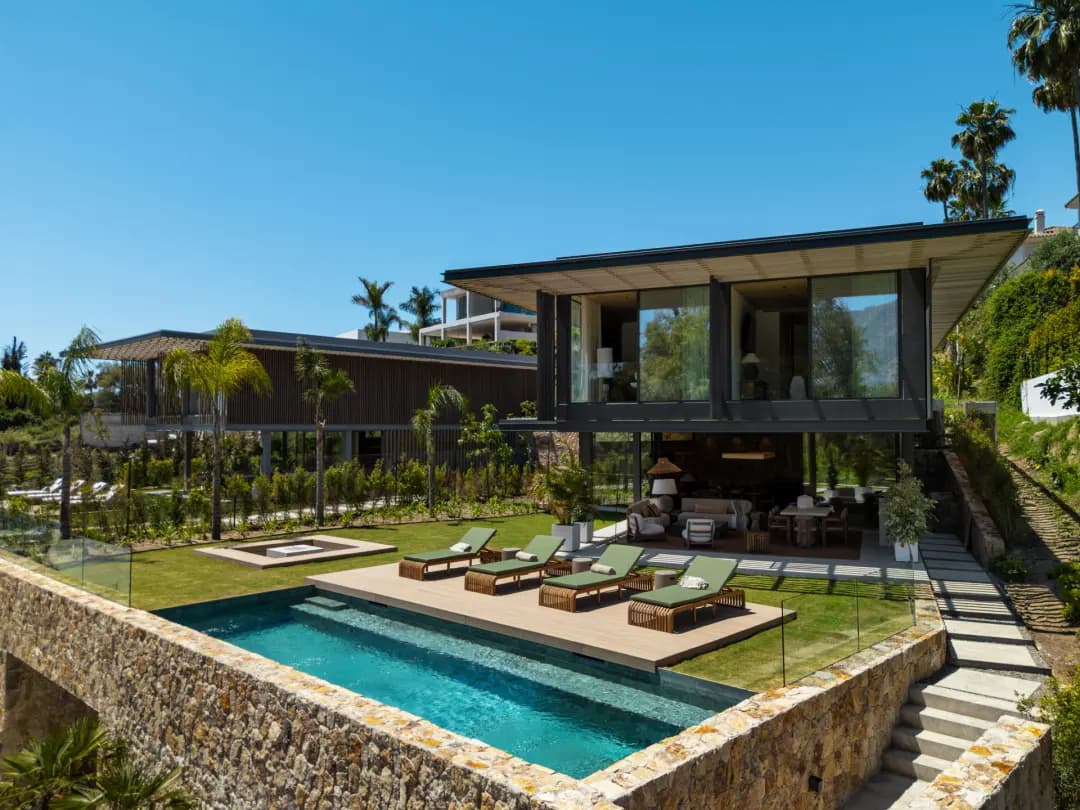
48 hours in Marbella before buying a home
A short visit becomes more useful when every stop answers a question. Leave room between viewings to walk, eat, try an everyday journey and return to the place that felt right the first time.
Cerquilla 57A in Nueva Andalucía, one of three catalogue examples for planning a viewing trip.
Read the guide ↗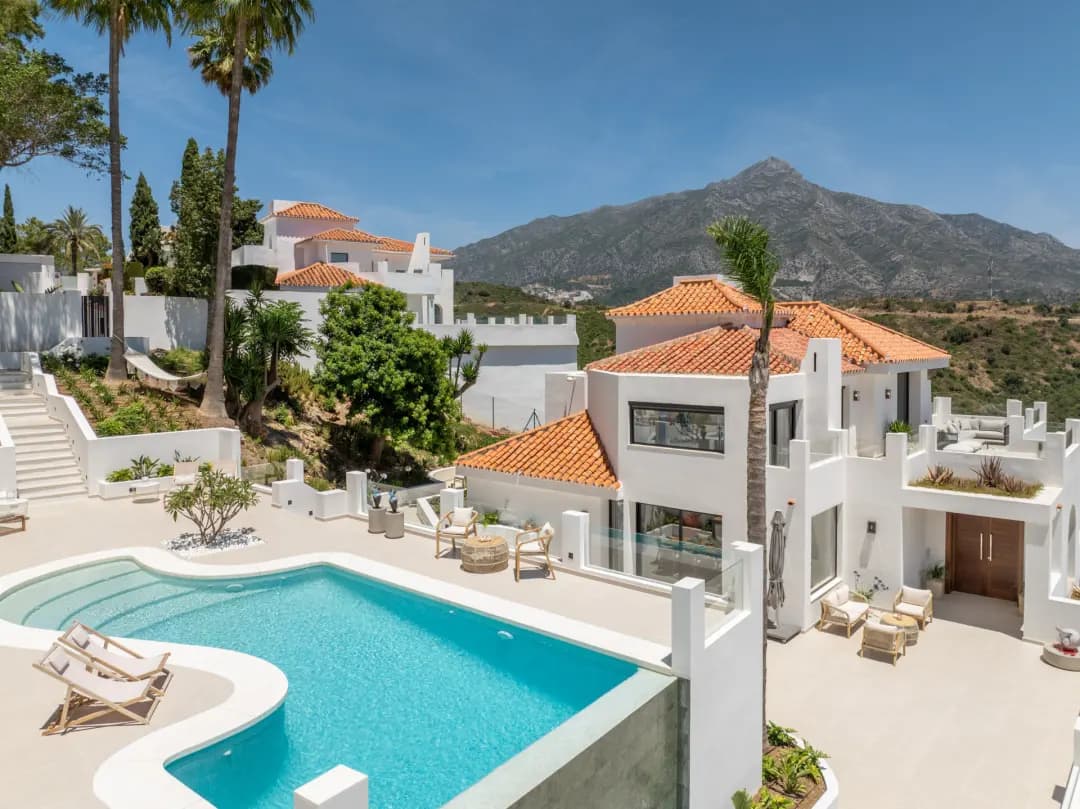
Indoor–outdoor living: choosing a villa in Marbella
The most useful terrace is the one you naturally use. Before choosing a villa, look beyond the open glass doors and test how cooking, dining, relaxing and looking after the house work on both sides of them.
Villa Luma in Nueva Andalucía: one of three catalogue examples discussed in this guide.
Read the guide ↗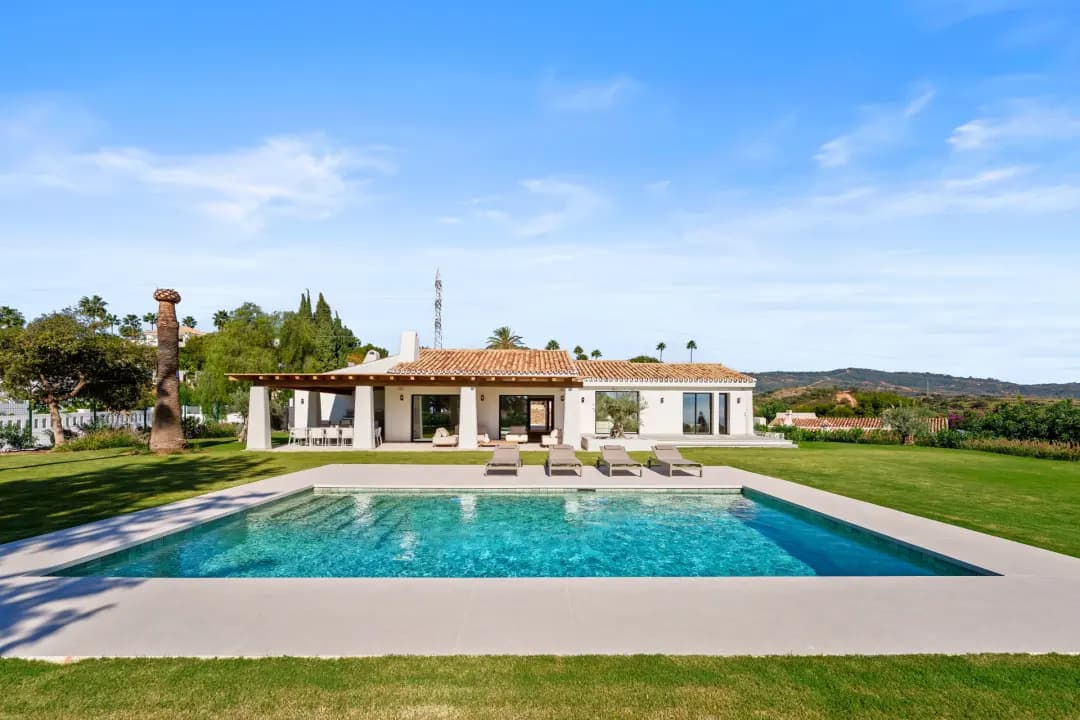
Winter in Marbella: choosing a second home for longer stays
A winter home earns its place in your life on an ordinary Tuesday: breakfast in a bright room, a comfortable place to work, a terrace you actually use and an easy arrival after time away. Here is how to assess that experience before buying in Marbella.
Villa La Serena in El Rosario, Marbella East. Catalogue photography illustrates the property; it is not a record of a winter inspection.
Read the guide ↗Marbella East: choosing a property by the coast
A coastal home can mean breakfast above the sea, a garden within reach of the beach or a base for afternoons around a marina. Marbella East offers several ways to approach that brief. The right choice begins with the relationship you want between your home and the shoreline.
Read the guide ↗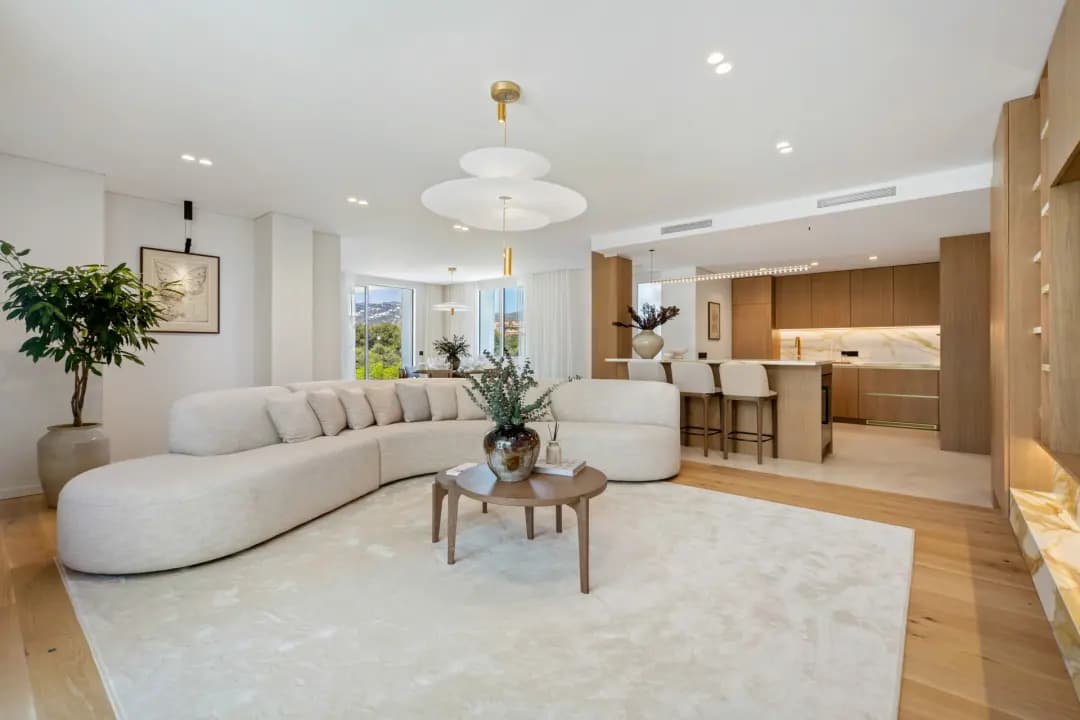
Los Monteros: choosing a home by the sea in Marbella
A view of the Mediterranean and a comfortable walk to the beach are different advantages. This guide helps you decide which matters more, then examine the building, terraces and everyday arrangements behind an attractive Los Monteros address.
Read the guide ↗
Golden Mile Marbella: a property buyer’s guide
There is more than one way to live on the Golden Mile. Explore the differences between a beachside house, a villa above the coast and a residence with shared facilities.
Read the guide ↗