
Buying a home near a school in Marbella: routes and family layouts
A good family location connects the right school with a manageable morning and a home that works when everyone returns. Start with the child's timetable, then test the whole day.

In this guide
When a family buys in Marbella, the phrase ‘close to schools’ can feel reassuring. Yet it leaves the important questions unanswered: which campus, for which age, through which entrance and at what time? A school pin on a map is only a starting point. The useful measure is the journey from the home's front door to the child's actual arrival point, followed by the adult's next destination.
The same applies inside the house. Four bedrooms on different floors may support a household differently from four bedrooms around one landing. A beautiful terrace does not tell you where school bags will be left, whether a working parent can take a call after pickup or how guests affect the children's evening routine. Family suitability comes from these connections.
This guide turns the school run into a practical property brief. It complements our overview of international schools with a method for checking journeys, organising viewings and comparing layouts. Villa Riva, Mozart 37 and Guadalmina 720 illustrate different scales of home; their inclusion does not establish a convenient route to any particular school.
Begin with the household's actual timetable
| Family pattern | What to test | What the home needs to support |
|---|---|---|
| One child, one campus | Door-to-entrance journey and the adult's next trip | A simple breakfast, storage and departure sequence |
| Siblings at different campuses | Both arrival windows and the order of drop-offs | Bedrooms and bathrooms that work at the same time |
| School bus plus activities | Confirmed stop, eligibility and the later return | A workable backup pickup and space for equipment |
| A parent working from home | The full morning loop and afternoon interruptions | A separate work room and an everyday homework space |
Confirm the educational plan before fixing the search area
Start with the child's year group, language needs, intended entry date and likely length of stay. Ask the admissions team about the process for that individual application before making one school the foundation of a home purchase. A preferred location is useful only if the educational arrangement can actually work. Keep a second option visible while the first is unresolved.
Aloha College's admissions page describes its application process, criteria and availability conditions. Use the school's current information and direct response to establish your position. A property address, an enquiry or a school visit should not be treated as confirmation of a place.
Translate the result into a property requirement with a clear status: confirmed, provisional or still being explored. If the family is choosing between two schools, request homes that can be tested against both rather than assuming the first preference will succeed. Keep educational records with the school; the property-search brief usually needs the relevant campus, timing and practical requirements, not private reports about the child.
Use the correct campus and arrival entrance
Ask the school to identify the campus for each child, the arrival entrance and the pickup arrangement. A general reception address may be useful for a first appointment but insufficient for planning a daily routine. Record the destination in a shared family itinerary, with the school year and date of confirmation, so everyone tests the same journey.
The official Aloha contact page places the school in El Ángel, Nueva Andalucía. Swans lists separate Primary and Secondary addresses: El Capricho and Calle Lago de los Cisnes. These details demonstrate why the name of a school alone is not a complete destination. Confirm the entrance appropriate to the child's stage directly.
If siblings will move between stages during the planned ownership period, compare today's journey with the next likely campus. A home can suit the first year beautifully yet create a difficult split in the second. You do not need to predict every future decision; identify the foreseeable change and decide whether the property still offers enough flexibility.
Test the route on a representative school day
Request the property's exact access point before assessing proximity. Include departure from the garage or parking space, any community gate, the relevant junctions and the final arrival procedure. The same straight-line distance can produce different routines because a vehicle entrance faces the wrong direction or the practical route uses a particular connection. Check both outward and return journeys.
Use maps to plan a trial, then make an ordinary journey during the school term when possible. Record the date, departure time, weather and anything unusual. Time the complete sequence, including lawful parking and the walk to the agreed entrance where needed. A single observation is a sample, so repeat a finalist's route if that journey will decide the purchase.
If you are visiting during holidays, label the evidence accordingly. Ask what remains untested and schedule a later check instead of turning a quiet midday drive into a school-morning estimate. The useful conclusion is a realistic range and a fallback plan, not a precise number borrowed from a marketing description.
Rehearse the morning from the kitchen to the car
During a viewing, walk through the sequence in which your household would actually leave. Someone prepares breakfast while another person finds shoes, fills a bottle or takes a work call. Notice where those activities meet. The ideal arrangement depends on your family, but a clear route between kitchen, storage and departure point is often easier to assess than a broad promise of family-friendly design.
Look at the parking arrangement with the vehicles and people you expect to use it. Can passengers enter without moving another car? Where do bags go? Is there a practical place to wait while a child finishes getting ready? If stairs connect parking and the main floor, walk them and discuss any accessibility needs before assuming the route will be easy every day.
Check the return sequence as well: wet shoes, sports clothing, deliveries and groceries. A utility room can be valuable, but only if it is located where it helps. Write the adjustment you would need, such as additional storage or a different room use, and obtain advice before treating a possible alteration as a completed feature.
Plan pickups, clubs and the day the bus does not fit
Build the afternoon separately from the morning. One child may finish an activity later than a sibling; a working parent may need to leave a meeting; a visitor may be using the second car. Ask the school which arrangements apply to your child's programme, then identify who handles each return. A convenient morning does not automatically make the full week manageable.
Colegio San José publishes a bus-routes page with stops and times. It is a useful starting point for a transport enquiry. Confirm the applicable campus, current stop, place availability and whether the service matches your child's activities directly with the school; a listed neighbourhood does not establish pickup at a particular home.
Walk through a backup day on paper. Who collects a child if the regular driver is unavailable, and where will the other child wait? If a bus or paid driver is central to the arrangement, request current terms and a real quote. Include the time needed to reach the stop or meeting point rather than treating transport as a door-to-door service without confirmation.
Treat walking distance as a route to inspect
A short distance on a map does not describe pavement continuity, crossings, gradients or the final approach. If walking is important, inspect the entire proposed route in person with the relevant age, mobility and supervision needs in mind. Begin at the actual pedestrian exit of the property and finish at the agreed school entrance, not at two approximate pins.
Consider the conditions in which the route would be used: carrying bags, accompanying more than one child, returning after an activity or dealing with heat or rain. Look for places where the walking route differs from the driving route. Do not assume a path through a private development is available to everyone; establish access before using it in the comparison.
Keep the conclusion specific. ‘We walked this route on this date with these limitations’ is useful evidence. ‘Safe for every child’ is not something a property description can establish. Where a crossing, access arrangement or mobility requirement remains unresolved, keep it as an open question and assess an alternative rather than smoothing it away with a proximity label.
Compare bedroom relationships, homework and work space
Ask for current floor plans and mark how the rooms would be used on a normal weekday. Younger children may need bedrooms close to the adults; older children may value separation and a quiet desk. Decide which guest room remains available during term and whether a visiting relative would displace a study or office. A bedroom count cannot answer these questions on its own.
Check the relationship between bathrooms, bedrooms and stairs when several people get ready at once. Walk from each proposed child's room to the kitchen and main exit. Pay attention to doors, landings and the position of leisure areas, without assuming a photograph proves acoustics or overnight comfort. Ask for another viewing if the conditions relevant to your family were absent the first time.
For home working, test whether the intended office can be used while children study, play or arrive with friends. Consider daylight, storage, a door that closes and the practical location of power and connectivity. Request service information and test the actual connection where appropriate; the presence of a room labelled ‘office’ is not a performance specification.
Make the garden part of an ordinary school evening
Think about how the outdoor space will be used after pickup rather than only during a weekend gathering. Where would someone sit while dinner is prepared? Is there a sheltered place for quiet play or reading? Can sports equipment be stored without crossing formal living rooms? A smaller, well-positioned outdoor area may fit your routine better than a large garden that demands a different way of living.
Review pool access, changes in level and the relationship between doors and outdoor areas with the needs of your household. Ask a qualified professional about any required adaptations and their feasibility. Views from a kitchen window are useful to understand, but they do not replace supervision or establish that a pool arrangement is suitable for children.
Ask how the garden, pool and technical equipment are maintained and how access is coordinated during the school week. Seek current service details and property-specific estimates before comparing running costs. The size of a plot alone does not tell you the workload, and a large leisure basement should be assessed as space that also needs cleaning, care and practical daily access.
Three homes that pose different family questions
Villa Riva in Nueva Andalucía is listed at €2,775,000 with four bedrooms, 264 m² built, 151 m² of terraces and a 390 m² plot. Its description identifies several levels and a rooftop solarium. Use the viewing to examine the bedroom arrangement, stairs and everyday departure sequence. Its area label does not establish a measured journey to Aloha or another school.
Mozart 37 in Sierra Blanca is listed at €11,950,000, with six bedrooms, 1,107 m² built and a 3,196 m² plot. The description includes a dedicated office and indoor and outdoor pools. Ask how family, guest and work uses fit the actual plan and what the scale means for upkeep. No separate terrace figure is supplied in the catalogue, so the table leaves it blank rather than estimating it.
Guadalmina 720 in Guadalmina Alta is listed at €5,995,000 with six bedrooms, 1,057 m² built, 382 m² of terraces and a 1,640 m² plot. Its described office and entertainment level invite a different question: can working, homework and leisure happen together without the family feeling dispersed? Confirm routes to the relevant school independently.
These are contrasting catalogue examples, not equivalent homes or a ranking of neighbourhoods. Asking prices and availability must be reconfirmed; areas follow the catalogue's definitions and need checking against documents. Compare the plans and daily routine first, then decide whether the price, scale and management demands belong in your brief.
| Property | Asking price | Built area | Terraces | Plot |
|---|---|---|---|---|
| Villa Riva | 2.775.000 € | 264 m² | 151 m² | 390 m² |
| Mozart 37 | 11.950.000 € | 1.107 m² | — | 3.196 m² |
| Guadalmina 720 | 5.995.000 € | 1.057 m² | 382 m² | 1.640 m² |
Selected from the Amalthea catalogue. Asking prices and availability require confirmation; these examples are not area price statistics. Areas follow the catalogue definitions and need confirmation against the property documents. A dash means no figure is supplied.
Turn travel time into a transparent weekly comparison
Use a simple calculation to see why small differences deserve attention. Suppose, purely as an illustration, that one adult drives four one-way legs each school day: home to school, back home, out for pickup and home again. At an assumed 15 minutes per leg, five days total 300 minutes. At an assumed 25 minutes, they total 500 minutes. The difference is 200 minutes, or three hours and twenty minutes a week.
Those figures are invented inputs, not observed Marbella travel times. They exclude waiting, walking and parking, and they do not apply unchanged if the adult continues to an office or uses a school bus. Replace the assumptions with your own observed journeys and actual weekly pattern. Count the child's travel separately from the adult's: the child is not necessarily present on every leg.
Add the practical costs only when you have evidence: a transport quote, parking arrangement or extra childcare need. Keep the comparison readable and show what remains provisional. Its purpose is to reveal the trade-off your family is making, not to attach a universal financial value to saved minutes or claim that a particular district is always the best choice.
Give each finalist one focused second visit
After the first round, choose the question that could change the decision for each home. For one it may be the morning exit; for another, bedrooms on separate floors; for a third, the route between campuses. Arrange a return around that question and request the information beforehand. A second visit should resolve uncertainty rather than reproduce the first tour at greater length.
Use a short observation sheet: date and conditions, route tested, arrival and parking procedure, rooms assigned, unresolved documents and the next person responsible for a reply. Separate what you personally observed from what the seller, agent or school told you. This makes discussions between family members clearer and keeps an attractive impression from becoming an unverified fact.
If time is limited, prioritise the finalist rather than adding more addresses to the itinerary. Ask for plans and precise answers remotely where appropriate, then retain the checks that require a visit. Respect school appointment procedures and private access; a property-viewing trip does not provide permission to enter a campus or restricted residential grounds.
Choose a home that supports the whole week
A strong shortlist connects an educational plan with a workable day and a home the family enjoys returning to. You may accept a longer journey for a layout that matters more, or prefer a smaller property because it makes the week simpler. The important point is to make that choice consciously, using comparable observations and clear priorities.
Before moving forward, resolve the requirements that would make the home unsuitable if they failed. Keep other improvements as separate projects with advice, costs and timing still to be established. Give the property team a practical brief: campuses, arrival and pickup pattern, room relationships, outdoor needs and budget. Sensitive school application information can remain with the relevant school.
- Confirm the child's campus, admissions position and relevant daily arrangements directly with the school.
- Test the complete journey in representative conditions, with a backup for pickups and activities.
- Assign bedrooms, work and homework areas on the current plan before relying on the room count.
- Reconfirm the shortlisted property's price, availability, documents and any adaptations before the next purchase step.
Sources & editorial notes
Editorial checklist prepared on 22 October 2026. Official school pages support the limited admissions, address and bus-service references below. Property facts and photographs come from the current Amalthea catalogue; prices are asking prices and availability requires confirmation. The three homes are layout examples, not verified walking-distance or school-admission recommendations. Routes have not been driven by the editorial team; the numerical scenario is hypothetical.
- Colegio San José · Rutas de Autobuses ↗
- Aloha College Marbella · Contact ↗
- Aloha College Marbella · Admissions ↗
- Swans International School · Contact ↗
· Amalthea Real Estate
Continue reading
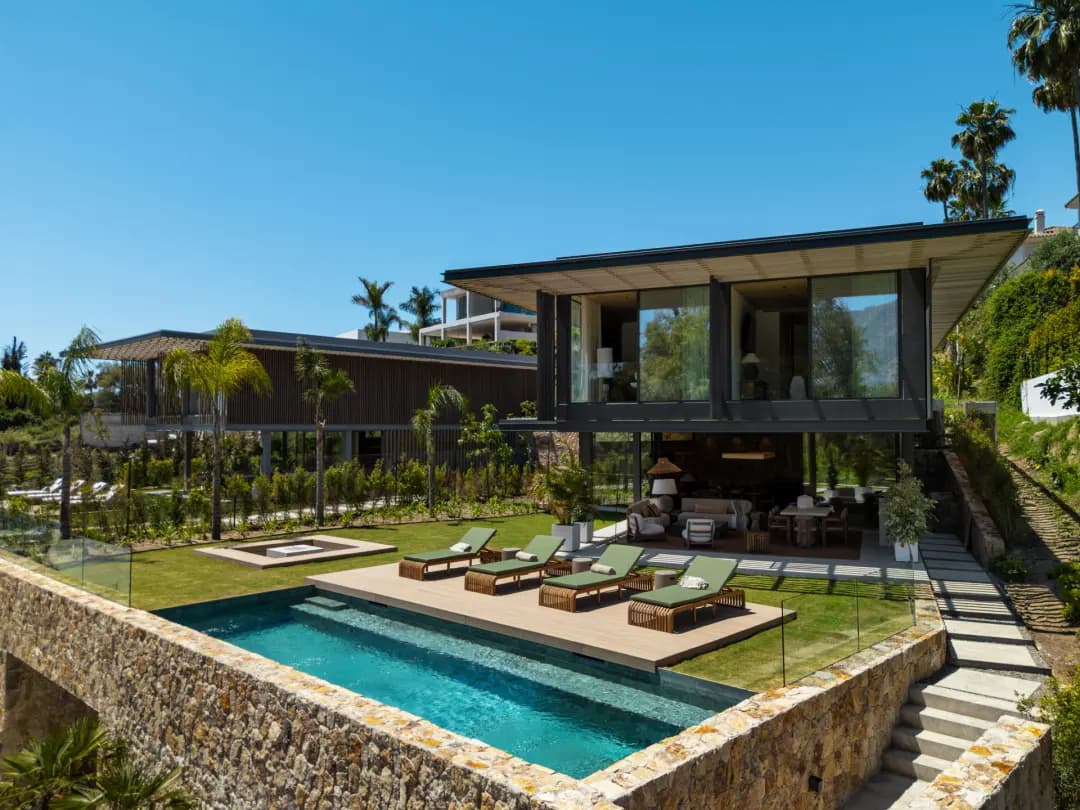
48 hours in Marbella before buying a home
A short visit becomes more useful when every stop answers a question. Leave room between viewings to walk, eat, try an everyday journey and return to the place that felt right the first time.
Cerquilla 57A in Nueva Andalucía, one of three catalogue examples for planning a viewing trip.
Read the guide ↗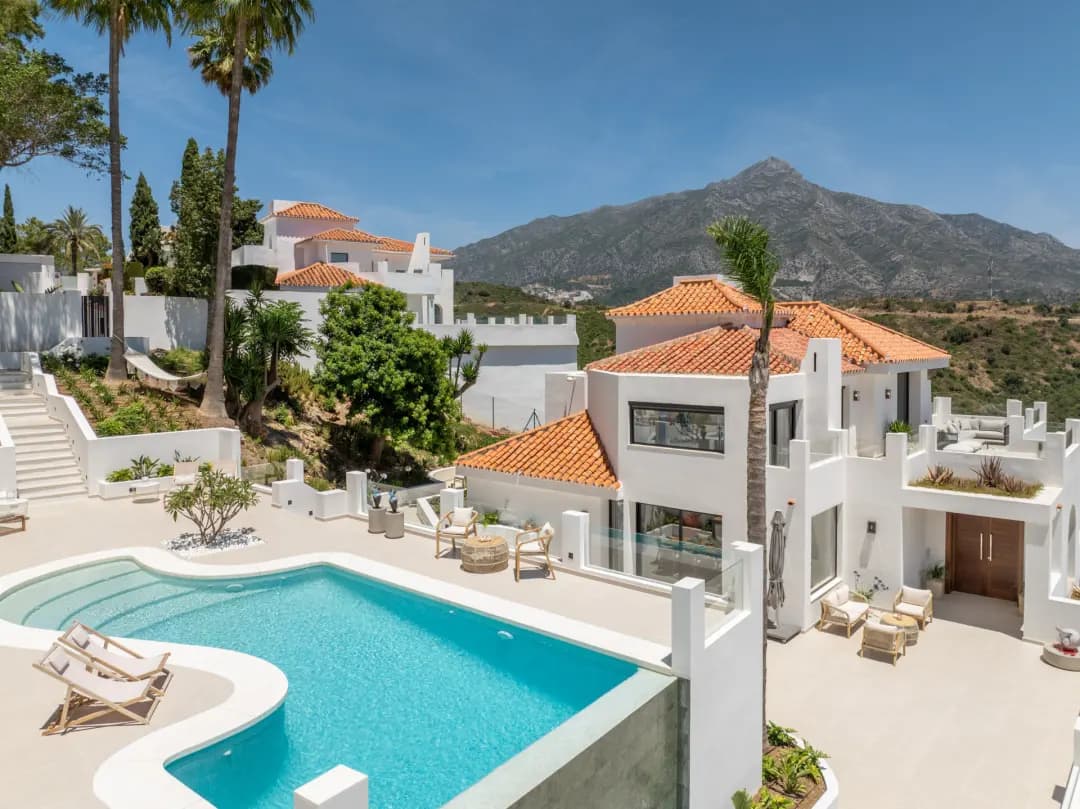
Indoor–outdoor living: choosing a villa in Marbella
The most useful terrace is the one you naturally use. Before choosing a villa, look beyond the open glass doors and test how cooking, dining, relaxing and looking after the house work on both sides of them.
Villa Luma in Nueva Andalucía: one of three catalogue examples discussed in this guide.
Read the guide ↗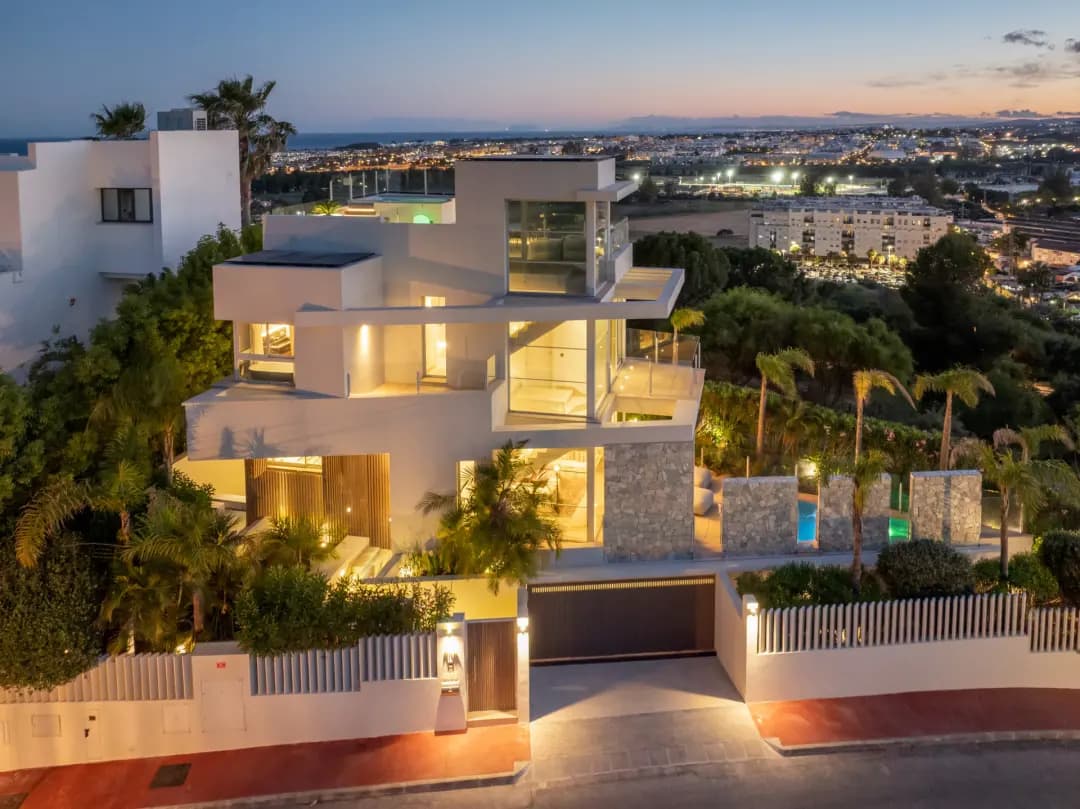
International schools in Marbella: choosing a school and a home
For a family moving to Marbella, the school decision can reshape the property shortlist. Start with your child’s learning needs and a realistic school place, then work out which home supports the whole family’s week.
Villa Riva is a residential property in Nueva Andalucía; school journeys must be checked separately.
Read the guide ↗Guadalmina Alta or Baja: choosing a family home in Marbella
Choosing between the two parts of Guadalmina starts with an ordinary family week. School, work, guests, golf and caring for a garden help establish which address supports the way you want to live.
Read the guide ↗Nueva Andalucía: choosing a family home in Marbella
You may live in a family home for years, yet see it for only a few hours before deciding. In Nueva Andalucía, begin with a school week: where you go each morning, what happens after lessons and how the house works when everyone is home.
Read the guide ↗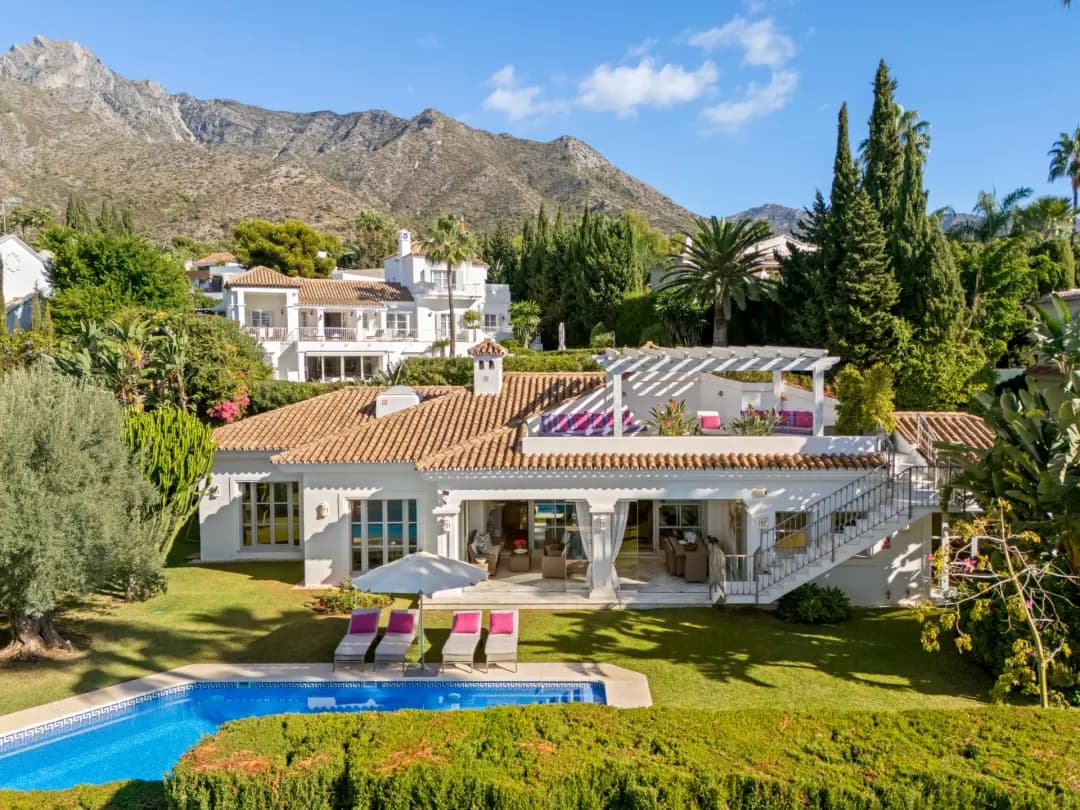
Sierra Blanca, Marbella: choosing a villa and its plot
In Sierra Blanca, the decision starts with the plot and how the house works inside. Explore three property formats and the questions to resolve before a viewing.
Read the guide ↗